


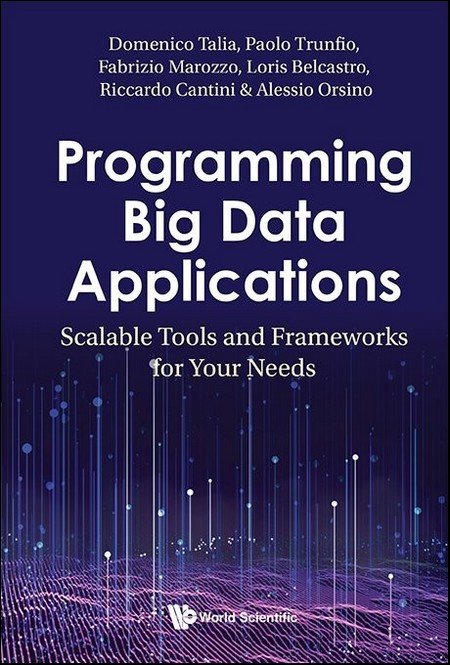
In the age of the Internet of Things and social media platforms, huge amounts of digital data are generated by and collected from many sources, including sensors, mobile devices, wearable trackers and security cameras. These data, commonly referred to as big data, are challenging current storage, processing and analysis capabilities. New models, languages, systems and algorithms continue to be developed to effectively collect, store, analyze and learn from big data.
Programming Big Data Applications introduces and discusses models, programming frameworks and algorithms to process and analyze large amounts of data. In particular, the book provides an in-depth description of the properties and mechanisms of the main programming paradigms for big data analysis, including MapReduce, workflow, BSP, message passing, and SQL-like. Through programming examples it also describes the most used frameworks for big data analysis like Hadoop, Spark, MPI, Hive and Storm. Each of the different systems is discussed and compared, highlighting their main features, their diffusion (both within their community of developers and among users), and their main advantages and disadvantages in implementing big data analysis applications.
Contents:
- Preface
- About the Authors
- Acknowledgments
- List of Figures
- List of Tables
- Introduction:
- Motivation and Goals
- Main Topics
- Audience and Organization
- Online Resources
- Big Data Concepts:
- Big Data Principles and Features
- Data Science Concepts
- Big Data Storage
- Scalable Data Analysis
- Parallel Computing
- Cloud Computing
- Toward Exascale Computing
- Parallel and Distributed Machine Learning
- Programming Models for Big Data:
- Parallel Programming for Big Data Applications
- The MapReduce Model
- The Workflow Model
- The Message-Passing Model
- The BSP Model
- The SQL-Like Model
- The PGAS Model
- Models for Exascale Systems
- Tools for Big Data applications:
- Introduction
- MapReduce-based Programming Tools
- Workflow-based Programming Tools
- Message Passing-based Programming Tools
- BSP-based Programming Tools
- SQL-like Programming Tools
- PGAS-based Programming Tools
- Comparing Programming Tools:
- Introduction
- Comparative Analysis of the System Features
- Comparative Analysis through Application Examples
- Choosing the Right Framework to Tame Big Data:
- The Input Data
- The Application Class
- The Infrastructure
- Other Factors
- Supplementary Material
- Bibliography
- Index
Readership: Undergraduate and graduate students in computer science, computer engineering, data science, and data engineering. PhD students and researchers in computer science and engineering, and data science.



Reviews
There are no reviews yet.